Bedding · Winter sleep comfort
Inside Washable Wool Pads: Loft, Moisture Control, and Care
A wool pad is a modest piece of bedding with an ambitious brief: soften the bed, buffer the mattress, and help manage the small changes in temperature and moisture that accumulate over a night. Its usefulness depends less on romance about natural fibers than on the details beneath the fitted sheet.
Winter has a way of making the bed seem like a climate system. A room cools after the heat clicks off; a heavy blanket traps warmth; the sleeper, who has spent the day thinking about entirely different matters, becomes aware of a foot outside the covers. The mattress is not the only influence on this nightly negotiation, but the thin layers directly above it can make a noticeable difference. Among them is the washable wool mattress pad: a protective, softly cushioned layer whose fill may offer a little loft without the dense, sealed-in sensation some people associate with heavier bedding.
“Wool pad” describes a family of constructions, not a single standardized object. Some pads use wool batting inside a cotton shell; some combine wool with plant-based or other fibers; some are designed primarily to protect a mattress, while others add more substantial cushioning. A fitted skirt or elastic corner straps keep the layer in place. The care label, meanwhile, may distinguish a genuinely washable pad from one that is merely spot-cleanable. The name tells you what to look for. It does not tell you everything you need to know.
For a winter sleep setup, the appeal is easy to understand. Wool is often valued for its ability to absorb moisture vapor and for the loft that gives batting its soft, springy feel. Yet a pad is not a thermostat, and no fiber can compensate for every bedroom problem. The most useful question is not whether wool is universally better, but whether a particular construction suits the mattress, the sleeper, and the practical life of the household.
What loft means on a bed
Loft is the thickness and resilience of a filling: the air held among its fibers, and the way that structure responds when weight presses down. In a wool pad, loft can give the mattress surface a gently cushioned quality. It may soften the first impression of a firm bed, but a thin pad should not be expected to transform a mattress whose support or shape is no longer comfortable. A pad adjusts the surface; it does not rebuild the foundation beneath it.
That distinction matters because descriptions of bedding often blur “softness,” “support,” and “pressure relief” into one inviting cloud. They are related, but they are not interchangeable. A pad with light loft can take the edge off a taut surface. A thicker topper changes the feel more substantially and may compress differently under the shoulders and hips. Neither guarantees a particular health outcome, and comfort is personal: sleep position, body shape, mattress construction, and preference all influence what feels right.
Wool batting also settles with use. A pad can compress where it bears the most weight, and quilt stitching or internal compartments help hold the fill in place. The amount and distribution of wool, the way it is carded, and the pattern of the quilting all contribute to how evenly the surface feels. A stitched pattern is not decorative trivia; it is part of the engineering that keeps a soft material from migrating into lumps or thin spots.
When comparing washable wool mattress pads, look for practical descriptions rather than relying on adjectives alone. Is the fill weight stated? Is the wool distributed in stitched channels or a quilted grid? Does the manufacturer describe the pad as a protective layer, a comfort layer, or both? These details help set expectations. A slim pad may be a sensible choice for someone who wants a modest change in feel and easy mattress coverage. A deeper wool-filled layer may feel more substantial, but it will also add height and may require more care.
Moisture, warmth, and the space beneath the covers
Sleep comfort is not simply a matter of being warm. It is a matter of keeping the bed from feeling clammy, stifling, or too cold as conditions shift. The body gives off heat and moisture during sleep; bedding absorbs, releases, or holds some of that moisture depending on its materials and construction. Wool can take up water vapor within its fibers while still feeling comparatively dry at the surface, a quality that helps explain its reputation in bedding. How much difference a particular pad makes depends on the whole system: the cover fabric, the fill, the sheets, blankets, room conditions, and the sleeper.
This is moisture management, not moisture elimination. A wool pad will not correct a damp room, prevent every episode of sweating, or make a waterproof barrier unnecessary when spills are a concern. Nor does “breathable” mean that heat cannot build up. A dense cover, multiple insulating layers, or a warm room can still leave a sleeper overheated. The pad is one part of a bed’s small weather, not its entire atmosphere.
For winter, the useful idea is balance. A well-chosen layer can add a little insulation while allowing the bed to feel less sealed than some synthetic or heavily coated constructions. But warmth is subjective. Someone who gets cold easily may welcome the added loft; someone who sleeps hot may prefer a thinner pad, lighter sheets, or fewer blankets. The same wool bedding can feel comfortable in one room and excessive in another. There is no universal winter setting hidden in a fiber.
It is also worth separating a washable wool pad from a waterproof mattress protector. A pad is generally chosen for surface comfort and some degree of coverage; a protector is designed to guard against liquids, dust, and everyday mishaps. Some households use both, but layering them changes the feel and can affect airflow. Check that the combined layers fit securely and that the protector’s instructions permit the arrangement. A fabric can be breathable and still have a waterproof backing that alters the bed’s overall feel.
Construction: fill, shell, and the small matter of fit
Wool is only one half of a wool pad. The shell touches the sheets and holds the batting in place. Cotton is a common choice because it is familiar against the skin and can provide a smooth, sturdy casing. Organic certification, where applicable, relates to specified production standards; it does not by itself establish that a pad will be softer, more durable, or more suitable for every sleeper. The weave and weight of the cloth also matter. A tightly woven shell can feel crisp and stable; a softer sateen may feel smoother. Either can work, provided the overall construction meets the household’s needs.
Fill descriptions deserve close reading. A pad may contain all wool, a wool blend, or wool combined with another batting material. Blends can change cost, weight, resilience, and washing requirements. “Natural” is not a care instruction, and “washable” does not mean every machine cycle is safe. The label’s specifics are more important than the general identity of the fiber. If the care information is vague, ask the maker or retailer before committing to a layer that will be difficult to clean.
Fit is less glamorous than fiber, but it is where nightly irritation often begins. Measure the mattress depth, including any existing topper or protector that will remain underneath. Then compare the measurement with the pad’s pocket depth or attachment system. A fitted design needs enough depth to reach beneath the mattress without straining at the corners. Corner straps can secure a topper-like layer, but they are not equivalent to a deep fitted skirt; check how they attach and whether they are compatible with the bed’s height.
A pad that is too small may creep toward the center or pull free at a corner. One that is too deep may bunch, particularly if the mattress is relatively low. Either can turn a quiet bedding choice into a small midnight chore. Before putting on the fitted sheet, smooth the pad and check that the fill lies evenly. If the mattress is adjustable, confirm that the pad’s construction can flex with it, and make sure straps or skirts do not interfere with movement.
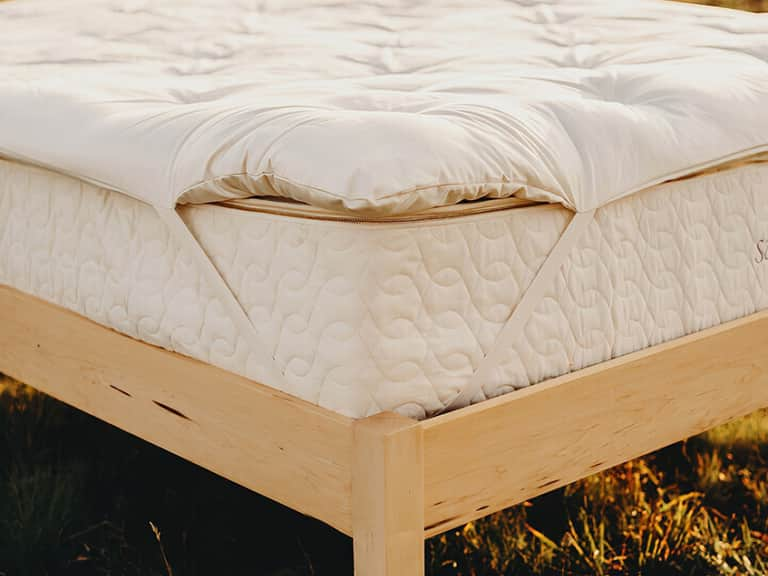
Some wool-filled layers are sold as toppers rather than pads. The categories overlap in everyday conversation, but a topper is often thicker and intended to change the surface feel more noticeably. For instance, the Savvy Rest Natural Savvy Woolsy Mattress Topper is described as a generously filled wool layer in a quilted organic cotton cover, with corner straps and an approximate three-inch total height. Those details place it closer to a substantial comfort layer than to a thin mattress pad. It may be useful as a construction example, but its care directions and dimensions should be considered on their own terms; another wool product may behave differently.
The word “washable” has conditions
Wool’s reputation for easy care is complicated by the fact that washing can alter the fiber and the structure of a filled object. Heat, agitation, abrupt temperature changes, and harsh detergents can encourage felting or shrinkage. A pad may be machine washable only on a cold, gentle cycle, and only if the washer has enough room for the item to move without being crushed into a wet bundle. A large pad that strains the machine may be better handled by a suitable commercial washer or cleaned according to the manufacturer’s alternate instructions.
Start with the sewn-in label. It takes precedence over general advice, including the suggestions below. If machine washing is permitted, use the stated water temperature and cycle, a detergent recommended for the material, and no more agitation than instructed. Avoid improvised shortcuts such as hot water, a long heavy-duty cycle, or aggressive stain treatment unless the maker specifically approves them. “Natural” does not mean indestructible; wool is still a fiber, and the fill is still stitched inside a construction that can be damaged.
Drying is equally important. A wool pad can retain considerable water, and drying it only at the surface may leave the interior damp. Follow the label’s instructions about low heat, line drying, or flat drying, and allow the pad to become thoroughly dry before returning it to the bed. Damp bedding can develop an unpleasant odor and is not a good candidate for a hurried remake. If tumble drying is allowed, check the item periodically and remove it promptly when dry rather than leaving it to bake in residual heat.
Between washes, airing the bed and laundering the removable sheet layers regularly can reduce the need for frequent washing of the pad itself. A washable mattress protector over the pad may shield it from spills, though it also adds another material layer. For a spot, blot rather than scrub, and consult the care guidance before applying cleaners. Wetting only a small area can be sensible for a minor mark, but it does not replace a full wash when the pad needs one. The goal is not to turn bedding into a laboratory specimen; it is to keep it clean without shortening its useful life.
Before the first wash, note the pad’s original shape and fit. After cleaning, distribute the fill gently and let the layer dry completely. If the care label allows it, a low-heat tumble may help restore loft; if it does not, do not assume that the dryer is a harmless finishing step. A pad that has shrunk, clumped, or developed persistent thin patches may have reached the limit of its construction—or may have been washed in a way it could not tolerate.
A few questions worth asking before choosing
- What change am I seeking? A little cushioning, a more substantial surface alteration, mattress protection, or some combination? A thin pad and a thick topper do different jobs.
- How do I sleep temperature-wise? A wool layer may suit someone seeking breathable warmth, but the right amount of insulation depends on the person and the rest of the bed.
- Does the fit match my mattress? Include existing layers when measuring depth, and check the pad’s skirt or straps rather than relying on mattress size alone.
- What exactly does washable mean? Find the permitted cycle, detergent, drying method, and any limits on machine size before purchase.
- How will it work with protection layers? If liquid protection is essential, confirm how a protector and wool pad can be combined without slipping or creating an unwanted change in feel.
These questions are deliberately plain. Bedding can invite elaborate claims, but the useful facts are often prosaic: fill content, shell fabric, dimensions, stitching, care instructions, and the likely change in feel. A thoughtfully chosen pad need not announce itself. Ideally, it becomes a comfortable part of the bed rather than a new object requiring nightly adjustment.
A quieter kind of winter preparation
The phrase “winterizing the bed” suggests a dramatic intervention, as if the mattress were a cabin about to face a blizzard. In most homes, the work is subtler. The room’s temperature, the number and weight of blankets, the fit of the sheet, and the person’s own preferences all contribute to the night’s comfort. A washable wool mattress pad may be one useful adjustment: a layer with some loft, a natural-fiber fill, and a care routine that is manageable for the household.
Its virtues are not mysterious. Wool can absorb moisture vapor; batting can cushion; a well-made shell can contain the fill; and a secure fit can spare the sleeper the minor annoyance of a shifted layer. Each quality has limits. A pad does not solve an unsuitable mattress, cure restless sleep, or make every chilly bedroom comfortable. It may, however, offer a measured way to refine the surface without replacing the bed or burying it beneath an indiscriminate pile of blankets.
That measuredness is part of its appeal. In the cold months, comfort is often achieved not through one grand purchase but through a sequence of small corrections: a room that is not too dry, bedding that does not overheat, a mattress surface that feels right under the body. A wool pad belongs to that modest domestic science. Choose it for its actual construction, fit it carefully, wash it according to its label, and let the rest of the bed do its share.