Bedding · Infant sleep
A Parent’s Guide to Organic Crib Sleep Surfaces
A crib mattress is easy to turn into a referendum on everything a parent hopes to get right: materials, safety, cleanliness, comfort. The more useful approach is quieter. Start with the essentials—a firm, flat surface that fits the crib—and then examine what the mattress is made of, how it is constructed, and how it should be cared for.
Published November 10, 2026
There is a particular kind of late-night research that begins with a practical question and ends, several tabs later, with a confusing parade of certifications, fibers, waterproofing systems, and confident claims about what a baby deserves. Organic crib mattresses sit at the intersection of two subjects that tend to make adults vigilant: the health of a new child and the materials inside the home. It is reasonable to want clear information. It is also useful to distinguish what a label can tell you from what it cannot.
The starting point is not whether a mattress is organic. It is whether the sleep surface is appropriate for an infant and fits the crib correctly. Public-health guidance emphasizes a firm, flat sleep surface, a fitted sheet, and a bare sleep space. A mattress’s material story matters to families comparing options, but it does not replace those basics. Nor does the word “organic,” by itself, establish that a mattress is safer, more comfortable, or better suited to a particular crib.
This guide is intended to help parents read product information with care. It is not medical advice, and it cannot substitute for the instructions supplied with a crib or mattress, current safety standards, or guidance from a child’s health-care provider. Its purpose is more modest: to make the comparison less mysterious and the checklist more useful.
Begin with the sleep setup, not the sales language
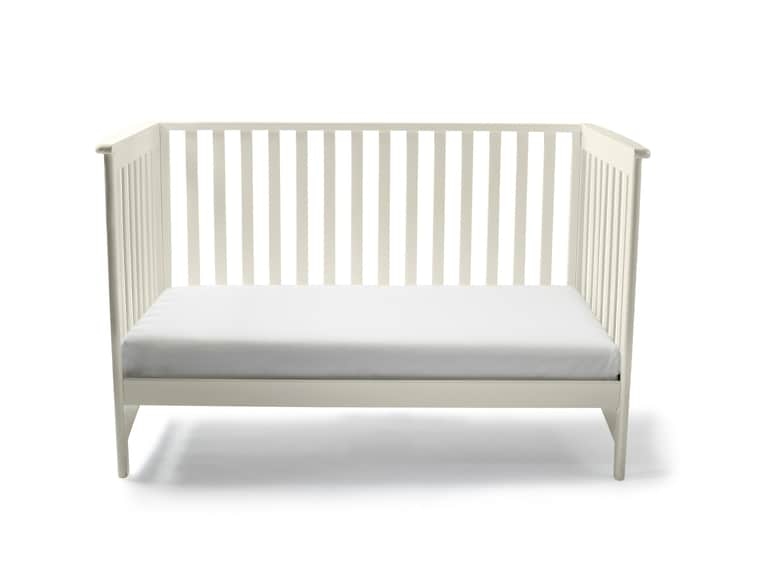
For an infant, the bed should be a firm, flat surface designed for the crib, covered by a tightly fitted sheet. Keep the sleep space clear of pillows, loose blankets, quilts, stuffed toys, and other soft objects. A mattress topper or cushion should not be added to make a surface feel plusher. The goal is not to create the miniature version of an adult bed; it is to follow a simple, consistent setup appropriate to the child’s age and the equipment being used.
“Firm” can be an awkward word in a marketplace that often celebrates softness. Here, it describes the kind of support expected of an infant sleep surface, not a claim about adult comfort. A mattress that feels pleasantly yielding in a showroom or product description is not necessarily suitable for a crib. Look for a product specifically identified by its manufacturer as a crib mattress, and check its instructions and labeling rather than trying to judge suitability by feel alone.
Likewise, a mattress described as “two-stage” may have different sides intended for different stages of childhood. Such descriptions are not a reason to improvise. Follow the manufacturer’s age and use directions, and confirm when, if ever, the mattress should be turned. If the instructions are unclear, contact the manufacturer before changing the setup.
Fit is a safety question
A mattress can be made from carefully chosen materials and still be the wrong mattress for a particular crib. Before comparing cotton, foam, springs, or waterproof layers, identify the crib’s required mattress size. Then compare that requirement with the mattress’s stated dimensions and the crib manufacturer’s directions. “Standard size” is a helpful description, not a substitute for checking the actual fit.
Pay attention to the full measurements, including thickness. A mattress that is too small can leave a gap around the edges; an incompatible thickness may affect how the mattress sits within the crib. The product page should give dimensions, and the instructions should explain the intended use. Once the mattress is installed, check that it lies flat and that the sheet fits snugly. If the crib or mattress instructions specify a particular fit test or measurement, follow those directions. Do not rely on a general rule found in an unrelated listing.
Families buying a replacement mattress should confirm the crib model and its requirements rather than assuming that a mattress that worked in another crib will fit this one. The same caution applies to hand-me-downs. A used mattress may be the correct size but still have damage, sagging, contamination, missing labels, or an uncertain history. If its condition or compatibility cannot be established, ask the crib or mattress manufacturer for guidance.
What “organic” can—and cannot—tell you
Organic is a useful word only when the product details explain what it refers to. A mattress might contain organic cotton in its cover, use it as a filling, or describe only one component as organic. Those are not interchangeable statements. Look for a materials list that identifies the parts of the mattress: cover fabric, core, padding or batting, waterproof layer, and any fire barrier. If a description uses broad phrases such as “natural,” “clean,” or “chemical-free,” ask what specific materials and processes are meant.
Certification marks can help make claims more legible, but their scope matters. A certification may apply to a particular fiber, finished textile, production process, or facility; it does not automatically mean that every component of the finished mattress is certified. Read the certifier’s own explanation, and see whether the product documentation identifies which materials are covered. If a listing displays a logo without saying what it certifies, the logo alone is not a complete answer.
Organic cotton is a fiber claim, not a whole-product verdict. It may be relevant to a family choosing natural fibers, but it does not by itself tell you how firm the mattress is, whether it fits the crib, how moisture is handled, or how the product should be cleaned. Similarly, “non-toxic” is often used loosely in marketing. A useful product description should name materials and provide clear safety and care information rather than expecting a reassuring adjective to do all the work.
When information is missing, it is fair to ask a direct question. Which components are organic? What is the core made from? Is the waterproofing layer part of the mattress or a separate accessory? What certification applies, and to which component? A manufacturer that can answer plainly gives you more to work with than one that relies only on atmosphere.
Construction: the layers beneath the cover
Crib mattresses can use different support cores and surface materials. Product descriptions may mention cotton, foam, springs, or proprietary structural designs. Parents do not need to become mattress engineers to compare them, but they should be able to find out what the mattress contains and how it is intended to perform. A clear materials breakdown is more useful than a string of technical-sounding terms without explanation.
Consider the mattress as a whole. A cotton cover does not tell you what is inside; a cotton filling does not establish that the cover is cotton; and a waterproof surface may involve a separate material or layer. Each component has a different job. The cover is the fabric nearest the sheet, the core provides the underlying structure, and a moisture barrier—where included—can change cleaning requirements and the way the surface is described.
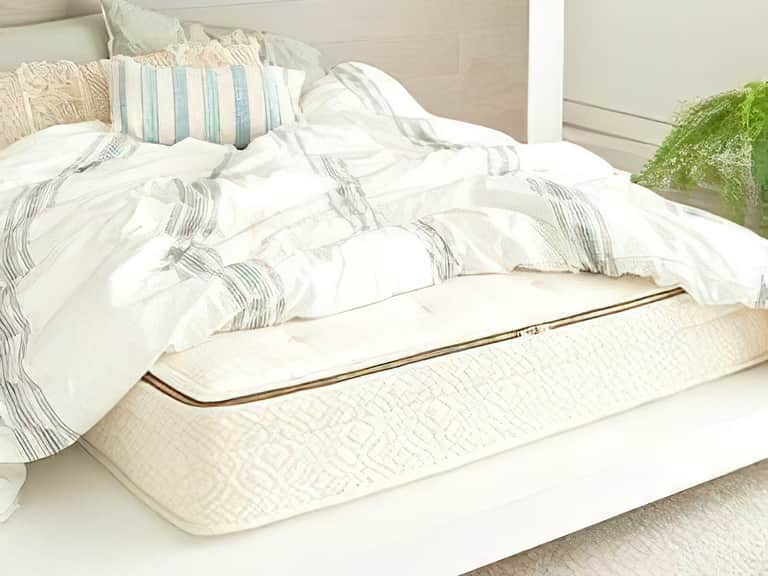
One example in the category is the Naturepedic Lightweight Organic Cotton Crib Mattress. Its listing describes organic cotton construction, a waterproof surface, a seamless design, and versions that include a two-stage option. The listed dimensions are approximately 27¼ by 51⅝ by 6 inches, but families should verify the current specifications and compare them with the crib’s own requirements before purchase. Those details are prompts for comparison, not a substitute for checking compatibility, instructions, and applicable safety information.
Waterproofing, spills, and everyday care
Life with an infant involves laundry. A waterproof surface may make cleanup simpler, but the phrase can describe different constructions. Some mattresses have an integrated waterproof cover; others may require a separate protector. Follow the mattress manufacturer’s directions about what is permitted. Do not add a protector, pad, or topper unless it is specifically compatible with the mattress and allowed by the instructions and relevant safety guidance. A well-meant extra layer can change the surface and fit of the sleep setup.
Ask how to clean the mattress before buying. Is the cover wipeable? Can any part be removed? Is machine washing prohibited? What should happen after a spill, and how long should the mattress dry before it is used again? These are unglamorous questions, which is one reason they are valuable. A product that sounds appealing but comes with care instructions the household cannot realistically follow may not be the most practical choice.
Moisture deserves attention because care affects the life of the mattress. Use the method specified by the manufacturer and let the product dry completely as directed. Avoid unapproved sprays, cleaners, or coverings, which can affect materials or leave residues. If the mattress becomes wet inside, develops an odor, or shows signs of damage, consult the manufacturer’s instructions rather than assuming that the surface is clean because it looks dry.
Do not treat “waterproof” as a promise that a mattress is immune to every kind of damage. It describes a product feature, not permission to skip care or inspection. A fitted sheet still belongs on the mattress, and any accessory should be used only when the mattress and crib directions allow it.
The small print on labels and claims
Crib mattress listings sometimes gather a dozen persuasive phrases into a single paragraph: breathable, hypoallergenic, antimicrobial, non-toxic, chemical-free, sustainable. These claims may refer to different things, and some are not self-explanatory. Translate them into questions. What material is being described? Is there a test or certification? What does the claim mean in practical terms? Is the statement about the cover, the core, or the finished mattress?
Be cautious about promises that imply a mattress prevents health problems or makes a baby sleep better. Product marketing cannot establish that result for an individual child. A carefully documented materials choice can help parents make a preference-based decision, but it is not a substitute for safe sleep practices or medical advice. If a child has a diagnosed allergy, skin condition, or other health concern, discuss material choices with a qualified clinician rather than relying on a product label to answer a medical question.
Certifications are most helpful when their meaning is specific and verifiable. Look for the organization’s name, the certified component, and a way to check the claim. Do not assume a certification for fabric covers every other part of a mattress. Nor should a certificate be mistaken for a complete assessment of fit, firmness, durability, or appropriate use.
A practical comparison checklist
When several organic crib mattresses seem plausible, put the marketing language aside and compare the information that bears directly on use:
- Intended use: Is the product clearly identified as a crib mattress, and do its instructions address infant use?
- Fit: Do the stated dimensions and thickness match the crib manufacturer’s requirements?
- Surface: Is the mattress described as firm and flat for its intended infant use?
- Materials: Are the cover, core, filling, waterproof layer, and other components identified?
- Organic claims: Which specific fibers or components are certified, and by whom?
- Care: Are cleaning, drying, and inspection instructions clear and manageable?
- Accessories: Does the manufacturer specify whether a protector or other layer is permitted?
- Product support: Can the manufacturer answer questions about compatibility, use, and replacement?
This list is not a scorecard in which the mattress with the most labels wins. It is a way to see whether the essential facts are available. If two products both meet the crib’s requirements and provide clear instructions, preferences about materials, weight, or ease of cleaning can help break the tie.
A room can be calm without being complicated
Parents are often encouraged to build an elaborate nursery around the arrival of a baby. The crib itself calls for a simpler arrangement. The mattress, fitted sheet, and the crib’s instructions matter more than decorative layers. Keep the sleep space uncluttered, and make sure the room is set up in accordance with current safe-sleep guidance. In winter, the answer to a chilly room is not loose bedding placed in the crib; ask a health-care provider about appropriate clothing and room conditions for the child.
That simplicity is not a rejection of care. It is a form of care that makes the important details easier to see. When the sleep space contains fewer objects, there are fewer accessories to fit, wash, assess, and second-guess. The mattress can be evaluated for its actual role, without being asked to carry the burden of every aspiration attached to the nursery.
The questions worth asking before you decide
Before ordering, check the crib manual and the mattress documentation side by side. Confirm the dimensions, intended use, surface description, care method, and the meaning of any material claims. If the listing and the manufacturer’s instructions disagree, seek clarification rather than guessing. If you already own a mattress and are uncertain about its condition, fit, or permitted accessories, contact the manufacturer or a qualified safety resource.
Organic materials can be a meaningful preference. They can also make comparison feel more complicated than it needs to be. A thoughtful decision does not require learning every vocabulary word in the bedding industry. It requires knowing what is in the product, understanding what the claims actually cover, and keeping the infant’s sleep setup firm, flat, properly fitted, and uncluttered.
In the end, the best product page may not be the one that tells the most dramatic story. It may be the one that gives you the dimensions, materials, instructions, and limits without making you hunt for them. That kind of clarity is not as soft-focus as a perfectly arranged nursery. It is more useful at two in the morning, when a sheet needs changing and the next sensible step should be obvious.